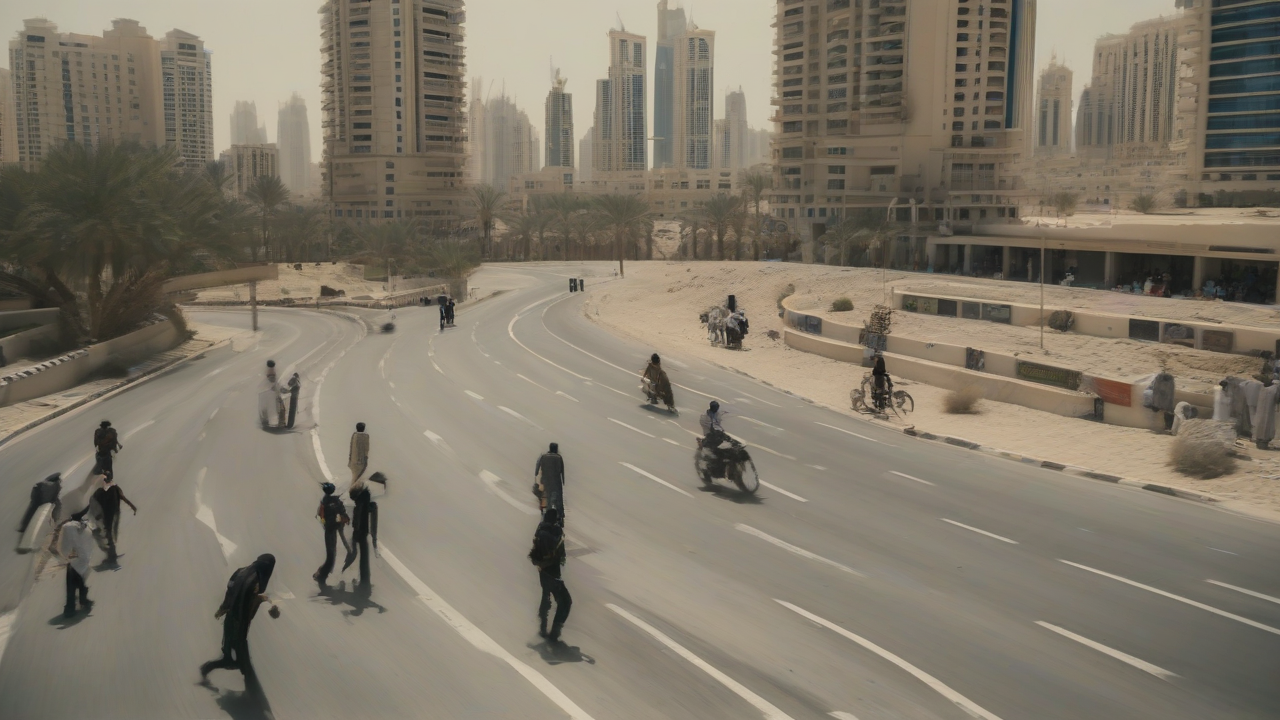
A City Under Siege
The recent turmoil in Dubai, as reported by the NYT Opinion, serves as a stark reminder that even the most cosmopolitan and economically vibrant cities can become embroiled in conflict. The question on everyone’s mind is: how did it come to this? Dubai, a city known for its opulence and excess, was not built for war. In fact, its very existence is a testament to the power of globalization and international cooperation. So, what happens when a city that has never had to worry about defense is suddenly thrust into the midst of a conflict?
The Illusion of Security
As the NYT Opinion piece highlights, Dubai’s rapid growth and development have been fueled by its strategic location and business-friendly environment. The city has become a hub for international trade and finance, attracting people and investment from all over the world. However, this growth has also created a false sense of security. With its focus on luxury and excess, Dubai has neglected to invest in the kinds of infrastructure and institutions that are necessary for a city to withstand conflict. The result is a city that is woefully unprepared to deal with the challenges of war.
Counterarguments and Realities
Some might argue that Dubai’s lack of preparedness is not a significant concern, given its location in a relatively stable region. However, as recent events have shown, even the most stable regions can be quickly destabilized. Others might point to the city’s strong economy and diverse population as evidence of its resilience. But can a city that is so deeply dependent on international trade and tourism really withstand the disruptions caused by conflict? The answer, unfortunately, is no. As the city struggles to cope with the aftermath of the conflict, it is clear that its economic and social fabric are far more fragile than previously thought.
A Call to Action
So, what can be done to prevent other cities from suffering the same fate as Dubai? The first step is to recognize that conflict can happen anywhere, at any time. Cities must invest in the kinds of infrastructure and institutions that will allow them to withstand the challenges of war. This includes not just military defense, but also social and economic support systems. It also requires a fundamental shift in the way that cities approach urban planning and development, with a focus on resilience and adaptability rather than just luxury and excess. As the world watches Dubai struggle to recover from the conflict, one thing is clear: the city’s very existence is a reminder that even the most unlikely places can become embroiled in war. The question is, will other cities learn from Dubai’s example, or will they suffer the same fate?
Looking to the Future
As we look to the future, it is clear that the conflict in Dubai is a wake-up call for cities around the world. It highlights the importance of preparedness and resilience in the face of uncertainty. Will cities heed this warning, or will they continue to prioritize luxury and excess over security and stability? Only time will tell. But one thing is certain: the city of Dubai will never be the same again. The question is, what will rise from the ashes of this once-great city? Will it be a stronger, more resilient Dubai, or a city forever scarred by the experience of war? The world waits with bated breath to find out. In the meantime, cities around the world would do well to take heed of the lessons of Dubai, and to start preparing for the unexpected. For in the end, it is not a matter of if, but when, the next conflict will arise.
Reader Comments