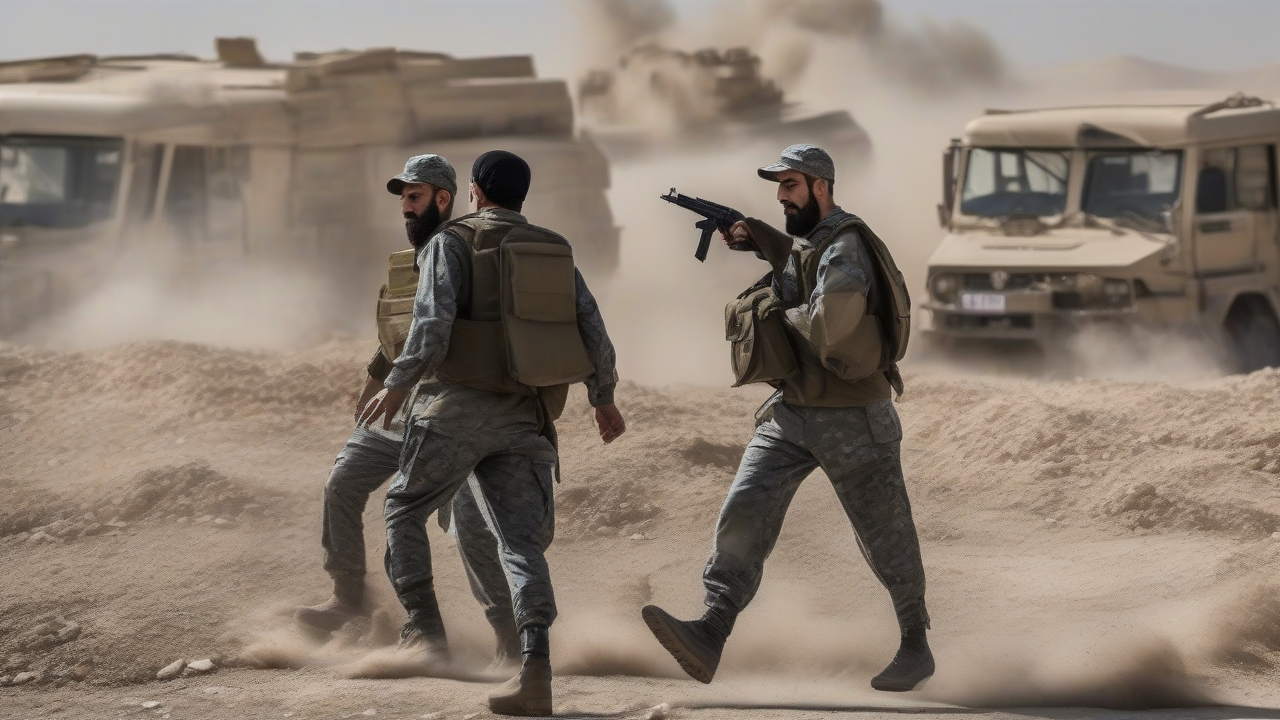
A Misguided Assumption
The notion that a weakened Iran will usher in a new era of peace and stability in the Middle East is a misguided one, as argued in a recent opinion piece in the New York Times. This assumption, held by many, is rooted in the idea that Iran’s influence is the primary driver of conflict in the region. However, as the NYT Opinion piece suggests, a defeated Iran will not produce the transformation of the Middle East that many are hoping for.
The Complexity of the Region
The Middle East is a complex and multifaceted region, with a multitude of factors contributing to its instability. To assume that the weakening of one country, in this case Iran, will somehow magically resolve the region’s problems is overly simplistic. The region is home to a diverse array of ethnic and religious groups, each with their own distinct interests and agendas. The NYT Opinion piece highlights the fact that a weakened Iran will not address the underlying issues that drive conflict in the region, such as poverty, lack of education, and political oppression.
Counterarguments and Criticisms
Some may argue that a weakened Iran will at least reduce the country’s ability to support militant groups and destabilize its neighbors. However, this argument ignores the fact that other regional players, such as Saudi Arabia and Turkey, also have a significant impact on the region’s stability. Furthermore, a power vacuum created by a weakened Iran could potentially be filled by other extremist groups, leading to even greater instability. As the NYT Opinion piece notes, a defeated Iran will not produce the transformation of the Middle East sought by many, and instead may lead to unintended consequences.
The Need for Nuance
So, what can be done to promote stability in the Middle East? The answer lies in a nuanced approach that takes into account the complex array of factors at play. This includes supporting democratic movements, promoting economic development, and encouraging diplomatic engagement between regional players. It also requires a willingness to confront the underlying issues that drive conflict, rather than simply relying on military might or regime change. As the NYT Opinion piece suggests, a more thoughtful and multifaceted approach is needed to address the region’s problems.
A Call to Action
In conclusion, the idea that a weakened Iran will transform the Middle East is a misguided one. Instead of relying on simplistic solutions, we must adopt a more nuanced approach that takes into account the complexity of the region. This requires a commitment to diplomacy, economic development, and democratic values. As we move forward, we must ask ourselves: what are the underlying drivers of conflict in the Middle East, and how can we address them in a meaningful way? The answer to this question will require careful consideration and a willingness to challenge our assumptions. Only then can we hope to create a more stable and peaceful Middle East. The NYT Opinion piece serves as a reminder that a defeated Iran will not produce the transformation of the Middle East sought by many, and it is up to us to find a more effective solution.
Reader Comments