A Troubling Parallel
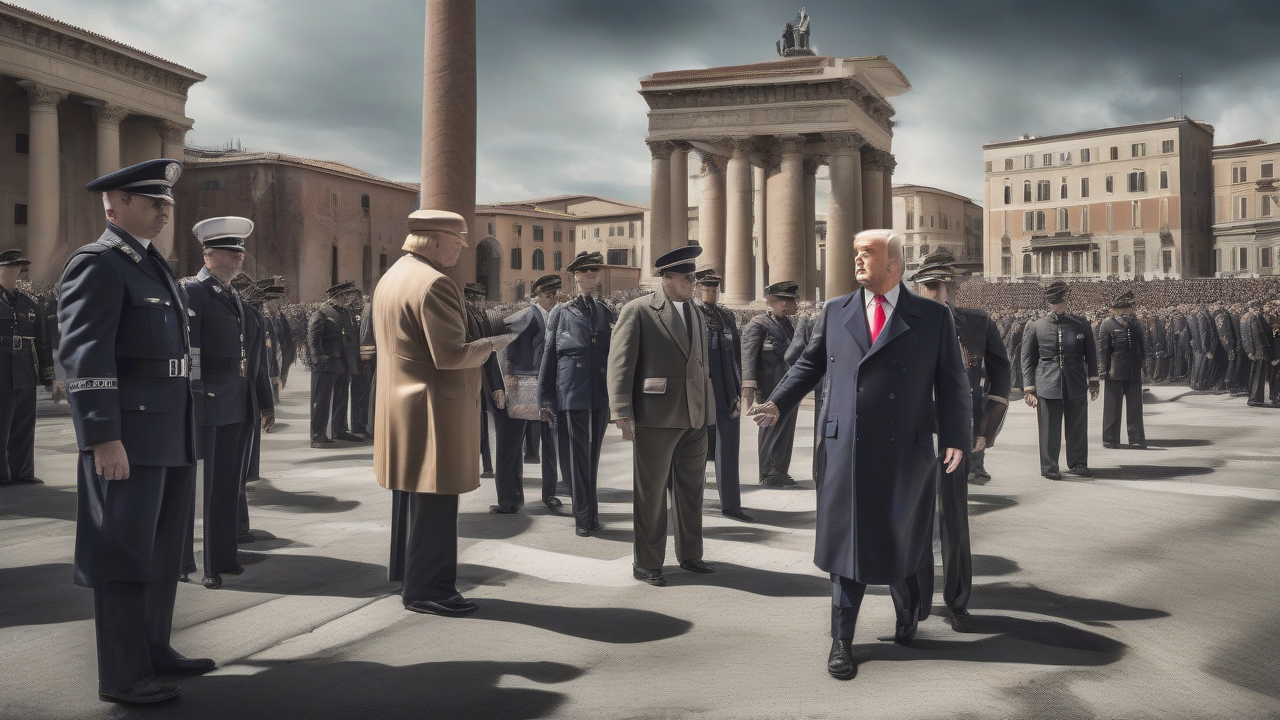
The recent revelations about Trump’s plans for Washington are a stark reminder of the dangers of unchecked authoritarianism. As noted in a recent NYT Opinion piece, Trump’s vision for the nation’s capital bears an unsettling resemblance to the megalomaniacal designs of Benito Mussolini, the infamous Italian dictator. This is not a comparison to be taken lightly, and it is imperative that we examine the parallels between these two leaders and their approaches to urban planning.
According to the NYT Opinion piece, published on March 13, 2026, Trump’s plans for Washington seem to be driven by a desire to impose his own personal brand of grandeur on the city. This echoes Mussolini’s efforts to reshape Rome in his own image, which were characterized by a mix of nostalgia for ancient glory and a thirst for modernist spectacle. As the piece suggests, both leaders seem to be motivated by a desire to leave an indelible mark on their respective cities, regardless of the cost or the consequences for the people who actually live there.
The Dangers of Authoritarian Urban Planning
But what does this say about Trump’s values and priorities? Is this really the kind of leader we want, one who is more concerned with burnishing his own legacy than with serving the needs of the community? The answer, of course, is no. As the NYT Opinion piece so astutely observes, Trump’s plans for Washington are a recipe for disaster, a cynical attempt to exploit the city’s symbolic importance for his own personal gain. And what about the potential consequences for the city’s residents, who will be forced to live with the consequences of Trump’s grandiose designs? Will they be consulted, or will their needs and concerns be ignored in the pursuit of Trump’s vision?
Some might argue that this is simply a matter of personal taste, that Trump’s plans for Washington are no worse than any other urban development project. But this misses the point entirely. The issue here is not just about aesthetics; it is about the kind of values and priorities that we want to see reflected in our public spaces. Do we want our cities to be designed with the needs of the people in mind, or do we want them to be shaped by the whims of a single, powerful individual? The answer to this question should be clear.
A Call to Action
So what can we do to stop this from happening? First and foremost, we need to speak out against Trump’s plans and demand a more inclusive, community-driven approach to urban planning. We need to ask ourselves: what kind of city do we want to live in? Do we want a city that is designed to serve the interests of the powerful, or do we want a city that is truly of the people, by the people, and for the people? The choice is ours, and it is a choice that we cannot afford to get wrong. As the NYT Opinion piece so eloquently puts it, Trump’s plans for Washington are a stark reminder of the dangers of authoritarianism, and it is up to us to ensure that this vision is never realized. In the words of the piece, “Trump’s plans for Washington bring to mind what Mussolini did — and tried to do — to Rome.” Let us not forget the lessons of history, and let us work together to build a better future for our cities and our communities.



Reader Comments