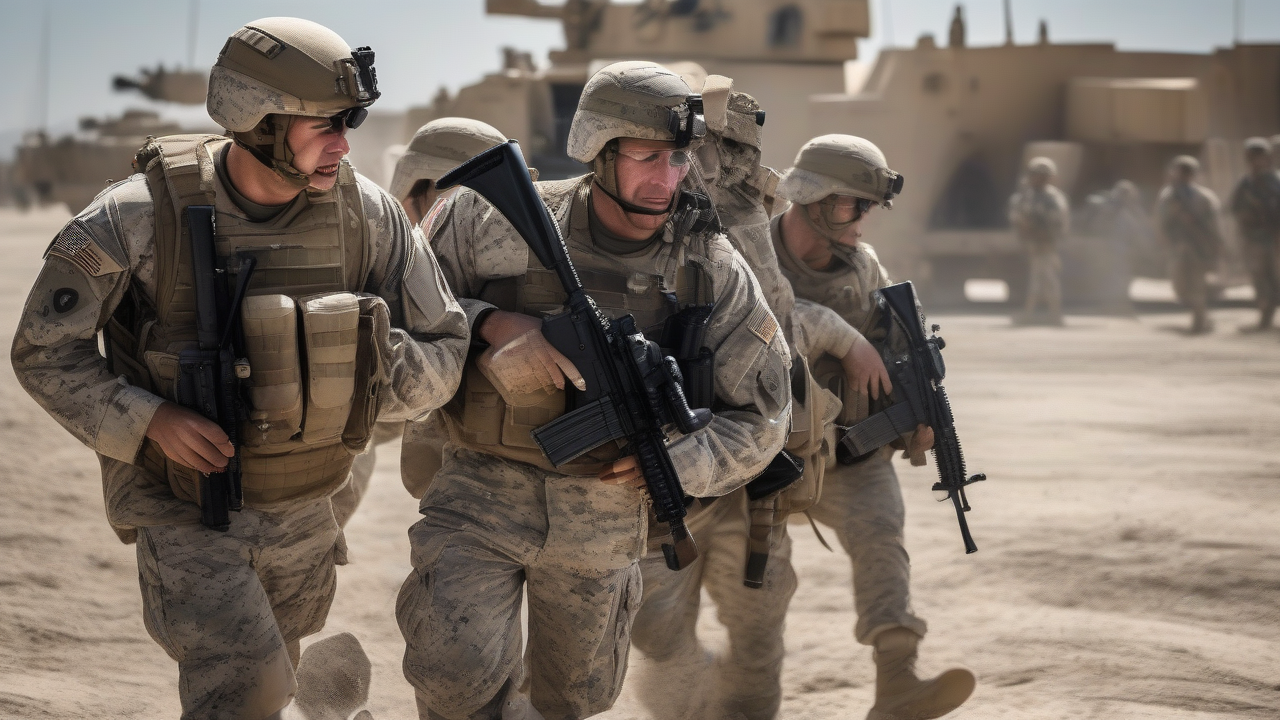
A Looming Threat: Incompetent Leadership in the U.S. Military
The U.S. military’s greatest weakness in its dealings with Iran is a stark and unsettling reality that cannot be rectified by simply throwing more money at the problem or making smarter acquisitions decisions. As highlighted in a recent opinion piece in the WashPost Opinions, the crux of the issue lies in incompetent leadership. This is a flaw that strikes at the very heart of the military’s effectiveness and its ability to navigate complex geopolitical situations like those presented by Iran.
The Inescapable Truth
The fact that incompetent leadership is a persistent problem within the U.S. military raises fundamental questions about the institution’s ability to adapt and evolve. How can an entity as critical to national security as the military afford to have leadership that is not up to par? What does this say about the selection, training, and promotion processes within the military? These are not merely academic questions; they have real-world implications for the safety and security of the nation and its interests abroad.
Counterarguments and Realities
Some might argue that the issue of incompetent leadership can be addressed through better training programs or stricter evaluation processes. While these measures are undoubtedly important and could lead to some improvements, they do not fully address the depth of the problem. Incompetent leadership is often a symptom of broader systemic issues, including political interference, bureaucratic inefficiencies, and a culture that may prioritize other factors over competence. Can the military truly overhaul its leadership culture without confronting these underlying challenges?
The Consequences of Inaction
The consequences of failing to address incompetent leadership are too severe to ignore. In the context of Iran, where tensions are already high and the geopolitical landscape is particularly volatile, the margin for error is slim. A single misstep, born from poor leadership, could escalate tensions to catastrophic levels. What then is the cost of incompetent leadership? Is it not measured in the lives lost, the conflicts prolonged, and the national interests compromised?
A Call to Action
It is imperative that the U.S. military, along with Congressional oversight and the Executive Branch, takes a hard look at its leadership structures and practices. This involves not just scrutinizing the promotion processes and leadership training but also fostering a culture that values and rewards competence above all else. The question is, will there be the political will and the institutional courage to undertake such reforms, or will the status quo prevail, leaving the military, and by extension the nation, vulnerable to the whims of incompetent leadership?
Looking Ahead
As the world becomes increasingly complex and the challenges facing the U.S. military mount, the need for effective, competent leadership has never been more pressing. The future of national security and the ability of the U.S. to project power and protect its interests depend on it. Will the U.S. military be able to confront and overcome its greatest weakness, or will it continue to be a liability in critical geopolitical hotspots like Iran? Only time will tell, but one thing is certain: the stakes have never been higher.
Reader Comments