
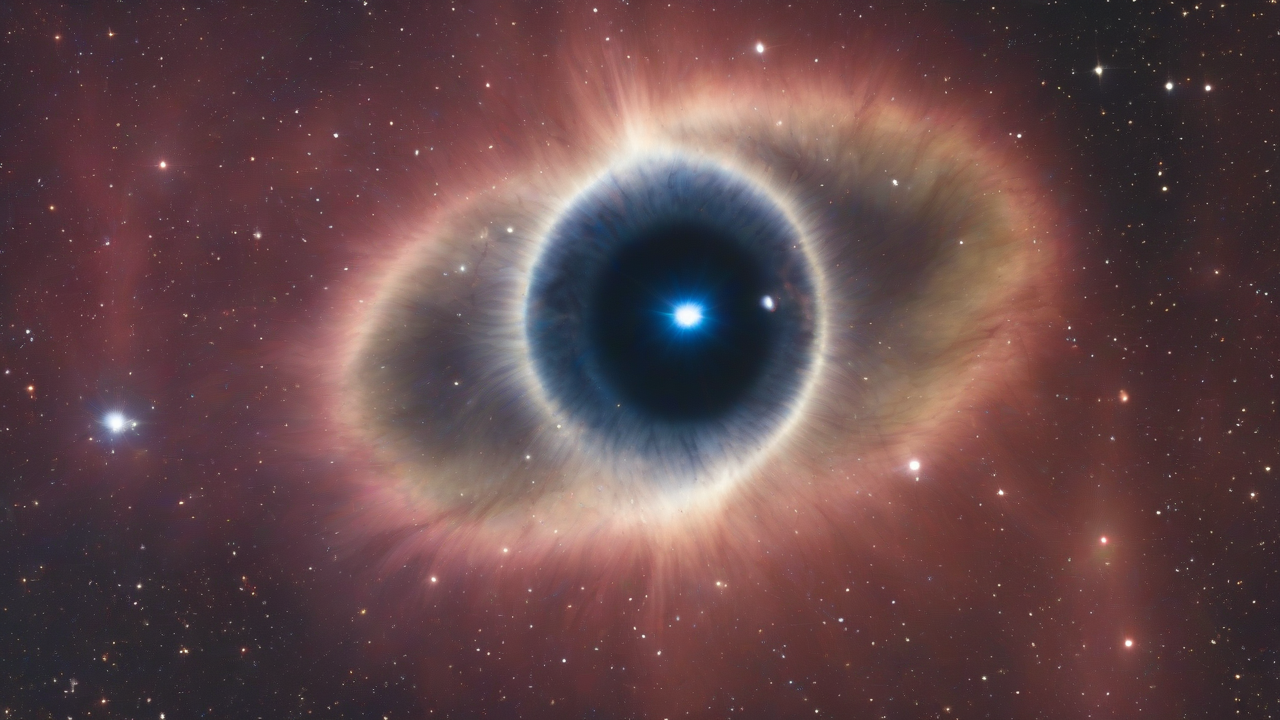
Unveiling the Cat’s Eye Nebula: A Collaborative Effort in Space Exploration
Astronomers have gained a new perspective on one of the most visually striking remnants of a dying star, thanks to a collaborative effort between the European Space Agency’s (ESA) Euclid and NASA’s Hubble Space Telescope. According to NASA, the resulting image, captured on March 3, 2026, offers an unprecedented view of the Cat’s Eye Nebula, also known as NGC 6543, which lies 4,400 light-years away in the constellation Draco.
A New Level of Detail
The combined views from Euclid and the Hubble Space Telescope have revealed intricate details of the Cat’s Eye Nebula, a planetary nebula that has fascinated astronomers for decades. Observers point out that this level of detail is a significant advancement in the field of astrophysics, allowing researchers to better understand the life cycle of stars and the formation of planetary nebulas. As reported by NASA, the image provides a unique opportunity for scientists to study the complex structures and dynamics of the nebula.
Why It Matters
The study of planetary nebulas like the Cat’s Eye Nebula is crucial for understanding the final stages of a star’s life. Analysts note that these nebulas are formed when a star exhausts its fuel and expels its outer layers, creating a complex and dynamic system. By examining the Cat’s Eye Nebula in unprecedented detail, researchers can gain insights into the processes that shape the universe, including the formation of new stars and planets. According to sources, this knowledge can also inform our understanding of the potential for life beyond Earth.
Impact on the Scientific Community
The release of this new image is expected to have a significant impact on the scientific community, particularly among astronomers and astrophysicists. The move signals a new era of collaboration between space agencies and telescopes, enabling researchers to access a wider range of data and gain a more comprehensive understanding of the universe. As noted by experts, this collaborative approach can lead to breakthroughs in our understanding of the cosmos and the discovery of new celestial objects.
What’s Next
As researchers continue to study the Cat’s Eye Nebula, they will be watching for new developments and discoveries. Upcoming observations and analyses are expected to provide further insights into the nebula’s structure and evolution. According to NASA, future studies will focus on the dynamics of the nebula and its potential for harboring new stars and planets. With the combined power of Euclid and the Hubble Space Telescope, scientists are poised to make new discoveries that will shed light on the mysteries of the universe.
Conclusion
The new image of the Cat’s Eye Nebula, captured by the European Space Agency’s Euclid and NASA’s Hubble Space Telescope, represents a significant advancement in our understanding of the universe. By combining the strengths of these two telescopes, researchers have gained a new perspective on one of the most visually striking remnants of a dying star. As the scientific community continues to study this extraordinary planetary nebula, we can expect new discoveries and a deeper understanding of the cosmos. According to sources, including NASA, this collaborative effort is a testament to the power of international cooperation in space exploration.

Reader Comments