
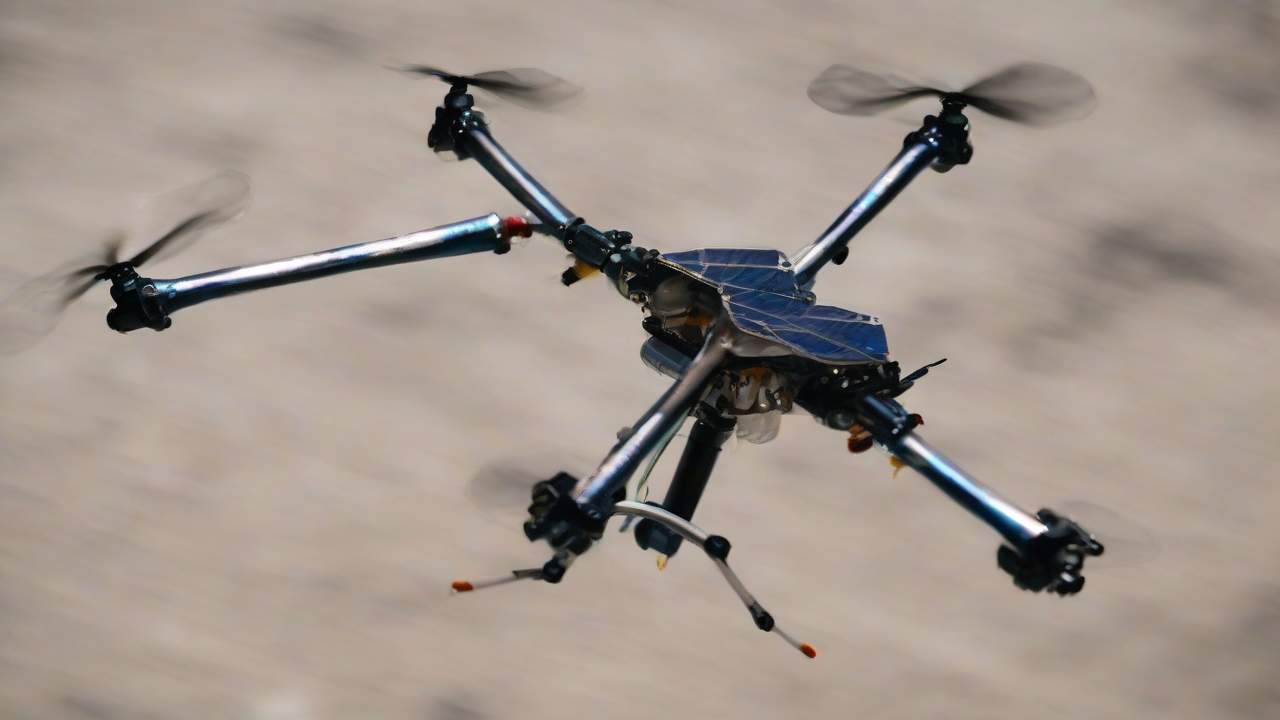
NASA Embarks on Ambitious Dragonfly Mission to Explore Saturn’s Moon Titan
In a significant milestone for space exploration, NASA has officially commenced testing the nuclear-powered Dragonfly drone, slated for a 2028 launch to Saturn’s moon Titan, as reported by The Daily Galaxy. This development marks a crucial step forward in the Dragonfly mission, which aims to send a flying robot to explore Titan’s mysterious lakes, dunes, and icy terrain. According to Space, the mission has now entered the rotorcraft integration and testing stage, paving the way for a historic expedition to one of the most fascinating celestial bodies in our solar system.
Context and Significance
The Dragonfly mission is part of a broader effort by NASA to explore the outer reaches of the solar system and uncover the secrets of Titan, a moon that has captivated scientists and astronomers for decades. With its thick atmosphere and lakes of liquid methane, Titan presents a unique environment that could potentially harbor life beyond Earth. As observers point out, the success of the Dragonfly mission could have far-reaching implications for our understanding of the universe and the possibility of life existing elsewhere. Analysts note that the mission’s findings could also shed light on the formation and evolution of our solar system, providing valuable insights into the mysteries of the cosmos.
Technical Challenges and Innovations
The Dragonfly drone is a cutting-edge piece of technology, powered by a nuclear reactor that will enable it to survive the harsh conditions on Titan. As Phys.org reports, the mission has begun the rotorcraft integration and testing stage, which involves assembling and testing the drone’s complex systems. According to National Today, the Dragonfly mission will send a flying robot to explore Titan’s surface, navigating through its dense atmosphere and extreme temperatures. The Sunday Guardian notes that the mission will focus on exploring Titan’s mysterious lakes, dunes, and icy terrain, which are thought to be similar to those found on Earth billions of years ago.
Impact and Implications
The Dragonfly mission has the potential to make significant contributions to our understanding of the universe, with implications for the fields of astrobiology, geology, and planetary science. As sources indicate, the mission could also pave the way for future human exploration of the outer solar system, potentially unlocking new resources and opportunities for scientific discovery. However, the mission also poses significant technical challenges, including the need to develop advanced technologies that can withstand the harsh conditions on Titan. Despite these challenges, analysts note that the potential rewards of the Dragonfly mission make it an exciting and worthwhile endeavor.
What’s Next
As the Dragonfly mission moves forward, NASA will continue to test and refine the drone’s systems, preparing it for launch in 2028. According to The Daily Galaxy, the mission is expected to provide a wealth of new information about Titan and its environment, shedding light on the moon’s mysterious lakes, dunes, and icy terrain. As the space agency looks to the future, observers point out that the success of the Dragonfly mission could have far-reaching implications for the field of space exploration, paving the way for new missions and discoveries in the years to come. With the testing phase now underway, the world will be watching with bated breath as NASA’s Dragonfly mission prepares to take the next giant leap for mankind.



Reader Comments