
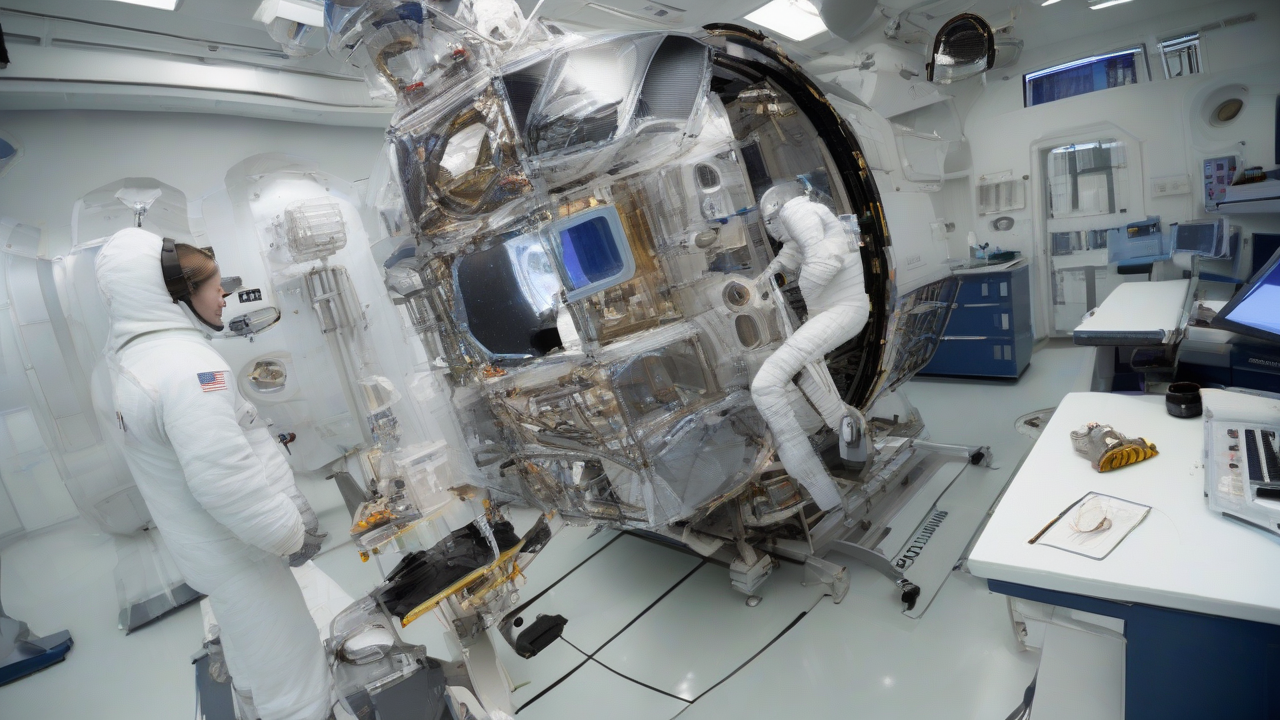
Breakthrough in Exoplanet Exploration
In a significant milestone for space exploration, a small NASA spacecraft has successfully delivered the first images of its exoplanet mission, marking the beginning of its science operations in orbit. According to NASA, the spacecraft, which is roughly the size of a cereal box, has sent back its first ultraviolet (UV) images of planet-host stars, a crucial step in the search for life beyond our solar system.
The SPARCS Mission
The SPARCS (Star-Planet Activity Research CubeSat) mission, led by Arizona State University (ASU), aims to study the interaction between stars and their planets, particularly in the ultraviolet spectrum. Observers point out that this mission is significant because it can provide valuable insights into the formation and evolution of planetary systems. As reported by ASU News, the mission has achieved “first light,” a term used to describe the first time a spacecraft’s instruments are turned on and begin collecting data.
Why it Matters
Analysts note that the study of exoplanets and their host stars is crucial in the search for life beyond Earth. The UV images sent back by the SPARCS spacecraft will help scientists understand the effects of stellar activity on planetary atmospheres, which is essential for determining the potential habitability of exoplanets. According to sources, this information will also help researchers better understand the formation and evolution of our own solar system.
Impact and Implications
The success of the SPARCS mission has significant implications for the field of exoplanet research. Experts indicate that the data collected by the spacecraft will be used to inform future missions and help scientists identify potential targets for further study. The mission’s findings will also contribute to our understanding of the complex interactions between stars and their planets, ultimately bringing us closer to answering the question of whether we are alone in the universe.
What’s Next
As the SPARCS spacecraft continues its science operations, researchers will be closely monitoring its progress and analyzing the data it collects. According to NASA, the mission is expected to provide a wealth of new information about exoplanets and their host stars, which will be used to plan future missions and studies. Sources indicate that the next step will be to use the data collected by the SPARCS spacecraft to identify potential targets for further study, including planets that may be capable of supporting life.
Conclusion
The successful delivery of the first images by the SPARCS spacecraft marks a significant milestone in the search for life beyond our solar system. As reported by National Today, the mission’s achievements demonstrate the potential of small spacecraft to make significant contributions to our understanding of the universe. With its UV images of planet-host stars, the SPARCS spacecraft is paving the way for future missions and studies, bringing us closer to answering the question of whether we are alone in the universe.
Reader Comments