
Breakthrough in Space Weather Monitoring
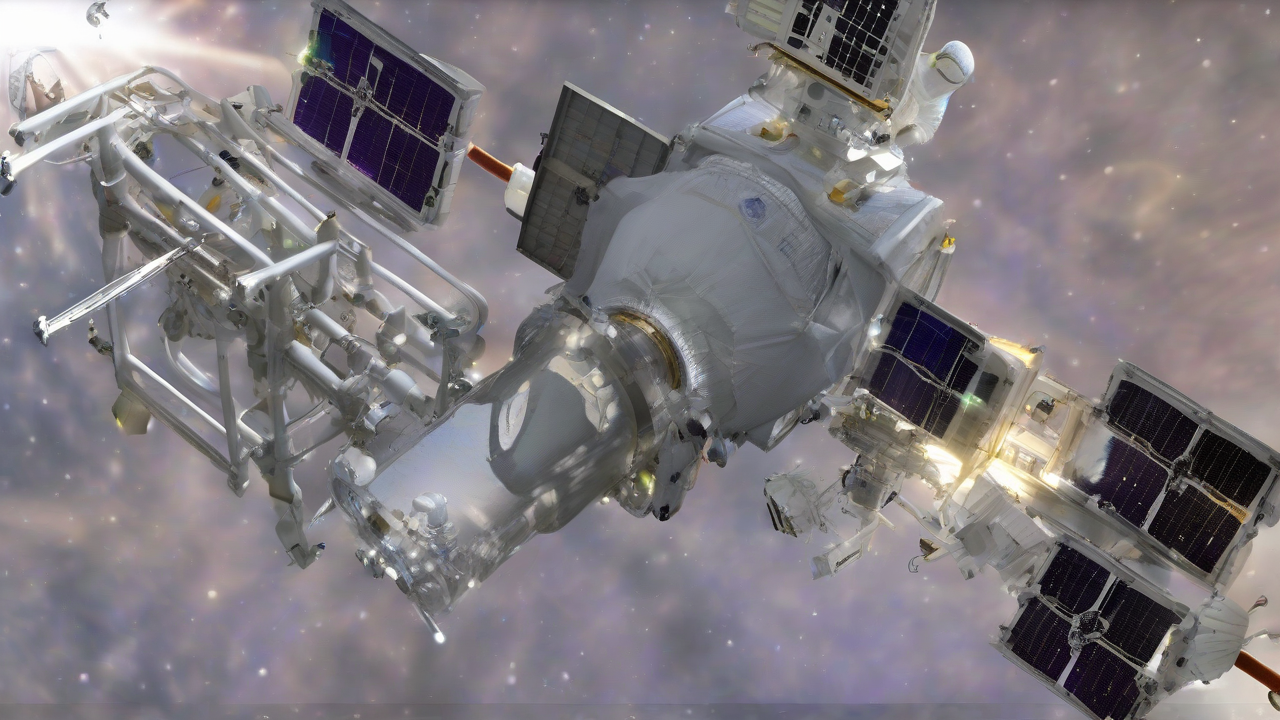
A significant advancement in the field of space weather monitoring has been achieved with the detection of a powerful geomagnetic storm by an ice satellite, as reported by Phys.org. According to the European Space Agency, the CryoSat mission has been upgraded with magnetometry capability, enabling it to accurately detect changes in the Earth’s magnetic field. This development is crucial for understanding and predicting space weather events, which can have a profound impact on our planet’s magnetic field and, subsequently, on satellite communications, power grids, and navigation systems.
Understanding Geomagnetic Storms
Geomagnetic storms are caused by solar flares and coronal mass ejections, which emit a massive amount of energy that interacts with the Earth’s magnetic field. This interaction can lead to disruptions in communication systems, increase radiation exposure for astronauts and people in space, and even cause power outages. The ability to detect and monitor these storms with precision is essential for mitigating their effects. Analysts note that the CryoSat satellite’s new magnetometry capability provides a significant improvement in the accuracy and reliability of geomagnetic storm detection.
Impact on Space Weather Research
The upgrade of the CryoSat mission with magnetometry capability is a significant step forward in space weather research, observers point out. As reported by Orbital Today, this development gives the satellite “magnetic field superpowers,” enabling it to provide detailed information about the Earth’s magnetic field during solar flares and other space weather events. This information is vital for scientists studying the Earth’s magnetic field and its interactions with the solar wind. According to the European Space Agency, the CryoSat satellite’s data will be used to improve our understanding of the Earth’s magnetic field and its role in protecting our planet from harmful solar radiation.
Broader Implications
The detection of geomagnetic storms by the CryoSat satellite has significant implications for a wide range of industries, including telecommunications, aviation, and energy. For instance, geomagnetic storms can cause disruptions to satellite communications, which can have a major impact on global communication networks. Additionally, the increased radiation exposure during geomagnetic storms can pose a risk to astronauts and people in space. Experts emphasize that the ability to detect and predict these storms is crucial for minimizing their impact on critical infrastructure and ensuring the safety of people in space.
Future Developments
As the CryoSat satellite continues to monitor the Earth’s magnetic field, scientists are eagerly awaiting the next major space weather event to test the satellite’s capabilities. According to sources, the upcoming solar maximum, expected to occur in 2026, will provide a unique opportunity to study the Earth’s magnetic field during intense solar activity. The European Space Agency and other space agencies around the world will be closely monitoring the situation, using data from the CryoSat satellite and other spacecraft to improve our understanding of space weather and its effects on our planet. As reported by Quantum Zeitgeist, the CryoSat satellite’s magnetometry capability is a significant step forward in the field of space weather monitoring, and its data will be essential for predicting and mitigating the effects of geomagnetic storms in the future.

Reader Comments