
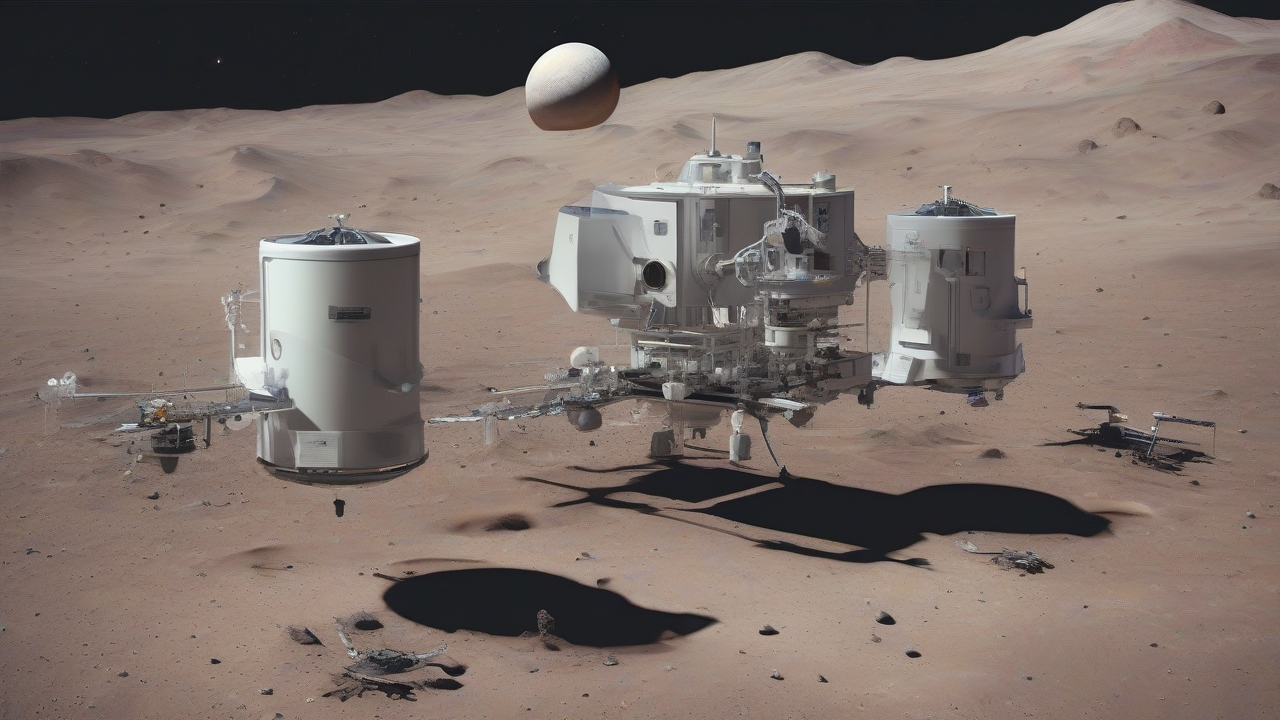
Introduction to a New Frontier in Astrobiology
The search for life beyond Earth has long been focused on planets orbiting stars, where the presence of a sun could provide the necessary energy for life to thrive. However, a new area of research suggests that moons of starless “rogue” planets could also have the conditions to support life, according to scientists. This concept challenges the traditional understanding of what makes a planet habitable and opens up new possibilities in the quest for extraterrestrial life.
The Role of Hydrogen Atmospheres
Analysts note that hydrogen atmospheres could play a crucial role in keeping exomoons habitable for billions of years. As reported by Universe Today, these atmospheres could provide the necessary insulation to maintain a stable temperature, even in the absence of a star. This is significant, as it suggests that life could exist on moons of rogue planets, which are planets that have been ejected from their star systems and now wander through space without a sun to provide energy.
Implications for the Search for Life
Observers point out that the discovery of exomoons with hydrogen atmospheres could be a game-changer in the search for life beyond Earth. As noted by ScienceAlert, the presence of these atmospheres could indicate that the moon has the necessary conditions to support life, even if it is not orbiting a star. This expands the scope of the search for life, as it suggests that scientists should be looking beyond traditional star-planet systems.
The Conditions for Life on Rogue Moons
Experts indicate that the conditions for life on rogue moons are still largely theoretical, but they are worth exploring. According to AOL.com, the key to life on these moons would be the presence of a stable and long-lasting heat source, such as tidal heating. This occurs when the gravitational pull of the rogue planet causes the moon’s interior to heat up, providing a potential energy source for life.
The Next Steps in the Search for Life
As the search for life on rogue moons gains momentum, scientists are eager to explore this new frontier in astrobiology. The move signals a shift in focus towards more unconventional habitats, where life could thrive in the absence of a star. According to 404 Media, the next steps will involve further research into the conditions necessary for life on rogue moons, as well as the development of new technologies to detect and study these distant worlds.
What to Watch Next
Looking ahead, the discovery of exomoons with hydrogen atmospheres could be a major breakthrough in the search for life beyond Earth. As researchers continue to explore this new area of study, they will be watching for signs of life on rogue moons, such as the presence of biosignatures or other indicators of biological activity. With the search for life on rogue moons still in its early stages, scientists are eager to see what future discoveries will reveal about the possibility of life existing in these unusual environments.
Reader Comments