
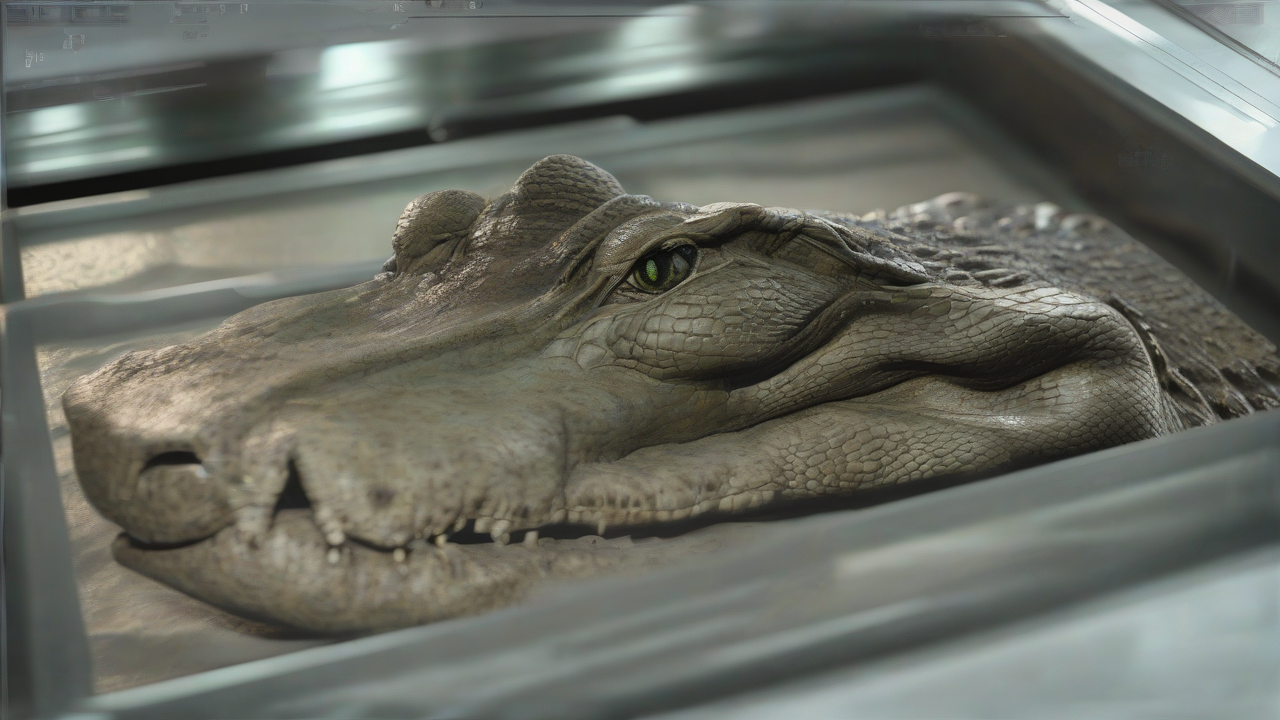
Discovery of Ancient Predator Sheds Light on Human Evolution
A significant discovery in Ethiopia has uncovered the existence of a massive prehistoric crocodile that coexisted with early human ancestors, including the iconic Australopithecus afarensis, approximately 3 million years ago. According to reports from Sci.News and Phys.org, the newly identified species, Crocodylus lucivenator, is believed to have been a formidable predator, measuring between 12 to 15 feet in length.
A Glimpse into the Past
The finding of this ancient crocodile species provides valuable insights into the ecosystem and environment of early human ancestors. Observers point out that the presence of such a large predator would have had a significant impact on the daily lives of these early humans, who would have had to contend with the threat of being hunted. As reported by Popular Science, the odd-nosed crocodile would have been an apex predator, posing a substantial risk to early hominins, including the famous Lucy.
Implications for Human Evolution
Analysts note that the discovery of Crocodylus lucivenator highlights the complex and often dangerous environment in which early humans evolved. The presence of such a powerful predator would have exerted a selective pressure on early human populations, favoring the development of traits that enhanced their survival and ability to evade predators. This, in turn, would have played a role in shaping the course of human evolution, as reported by Discover Magazine.
Uncovering the Past
The fossil record of Crocodylus lucivenator was found in Ethiopia, a region renowned for its rich paleontological heritage. Sources indicate that the discovery was made possible through a combination of meticulous excavation and careful analysis of the fossil remains. As ZME Science reports, the finding of this ancient crocodile species has significant implications for our understanding of the Pliocene era and the evolution of life on Earth.
Looking Ahead
As researchers continue to study the fossil record of Crocodylus lucivenator, they are likely to uncover more information about the ecology and behavior of this ancient predator. According to experts, further analysis of the fossil remains and the surrounding environment will provide valuable insights into the lives of early human ancestors and the world they inhabited. As the scientific community awaits the publication of more detailed research on this discovery, one thing is clear: the finding of Crocodylus lucivenator has shed new light on the fascinating and often perilous world of our ancient human ancestors.
The Bigger Picture
The discovery of Crocodylus lucivenator serves as a reminder of the importance of continued exploration and research into the natural world. By uncovering the secrets of the past, scientists can gain a deeper understanding of the complex interactions that have shaped the course of evolution and the diversity of life on Earth. As reported by Sci.News, the finding of this ancient crocodile species is a significant addition to our knowledge of the Pliocene era and the evolution of early human ancestors.



Reader Comments