
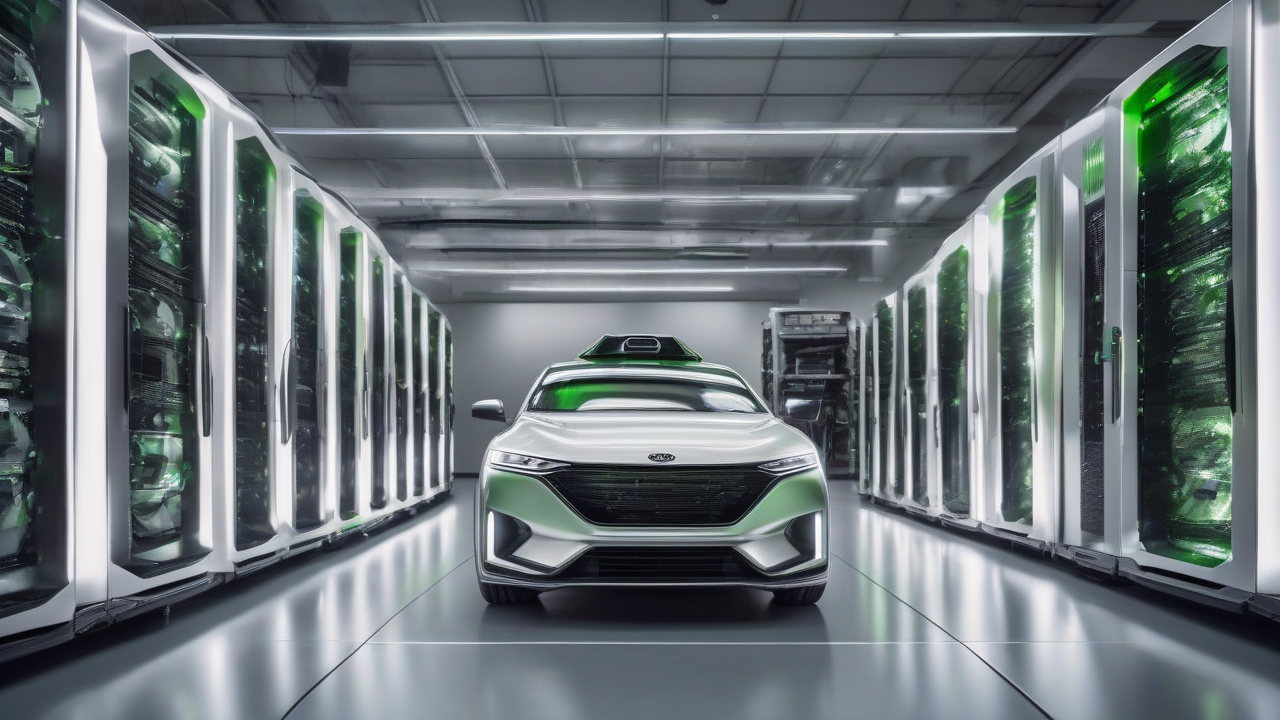
Autonomous Driving Ambitions
In a bid to surpass industry leaders Waymo and Tesla, Nvidia has been quietly advancing its autonomous driving capabilities, with significant progress made in recent months. According to sources close to the matter, as reported by The Verge, Nvidia’s head of automotive, Xinzhou Wu, has been conducting regular test drives with CEO Jensen Huang to showcase the company’s hands-free autonomous driving system. These test drives, which take place every six months, are only initiated when Wu has “good confidence” in the system’s driving capabilities, highlighting the rigorous standards Nvidia is striving to meet.
Industry Context and Implications
The autonomous driving sector has witnessed tremendous growth in recent years, with several key players vying for dominance. Analysts note that the market is poised for significant expansion, driven by increasing demand for safe, efficient, and convenient transportation solutions. As Nvidia seeks to establish itself as a major player in this space, observers point out that the company’s success will depend on its ability to develop and deploy reliable, high-performance autonomous driving systems. The move signals a shift towards more collaborative efforts between technology companies and automotive manufacturers, with the ultimate goal of bringing autonomous vehicles to the masses.
Technical Challenges and Advancements
Nvidia’s autonomous driving system relies on advanced software and hardware components, including sophisticated sensors, high-performance computing platforms, and complex artificial vision systems. Experts in the field indicate that the development of such systems presents significant technical challenges, requiring the integration of multiple technologies and the resolution of complex safety and regulatory issues. Despite these challenges, Nvidia has made notable progress in recent months, with its system demonstrating improved performance and reliability in real-world test scenarios.
Competitive Landscape and Market Dynamics
The autonomous driving market is characterized by intense competition, with established players like Waymo and Tesla competing with newer entrants like Nvidia. Analysts note that the market is likely to undergo significant consolidation in the coming years, with only a few players emerging as dominant forces. As Nvidia seeks to establish itself as a major player in this space, the company will need to navigate complex regulatory environments, build strategic partnerships with automotive manufacturers, and develop innovative solutions that address the needs of consumers and businesses alike.
Future Developments and Key Milestones
As Nvidia continues to advance its autonomous driving capabilities, industry watchers will be closely monitoring the company’s progress and assessing its potential to disrupt the market. According to sources, Nvidia is likely to announce significant updates to its autonomous driving system in the coming months, including improved performance, enhanced safety features, and expanded compatibility with various vehicle platforms. With several key milestones approaching, including upcoming regulatory deadlines and industry conferences, Nvidia’s ability to execute its strategy and deliver on its promises will be closely scrutinized by investors, analysts, and industry stakeholders. As reported by The Verge, Nvidia’s head of automotive, Xinzhou Wu, remains confident in the company’s ability to surpass industry leaders and establish itself as a dominant force in the autonomous driving sector.


Reader Comments