
The Great Map Debate
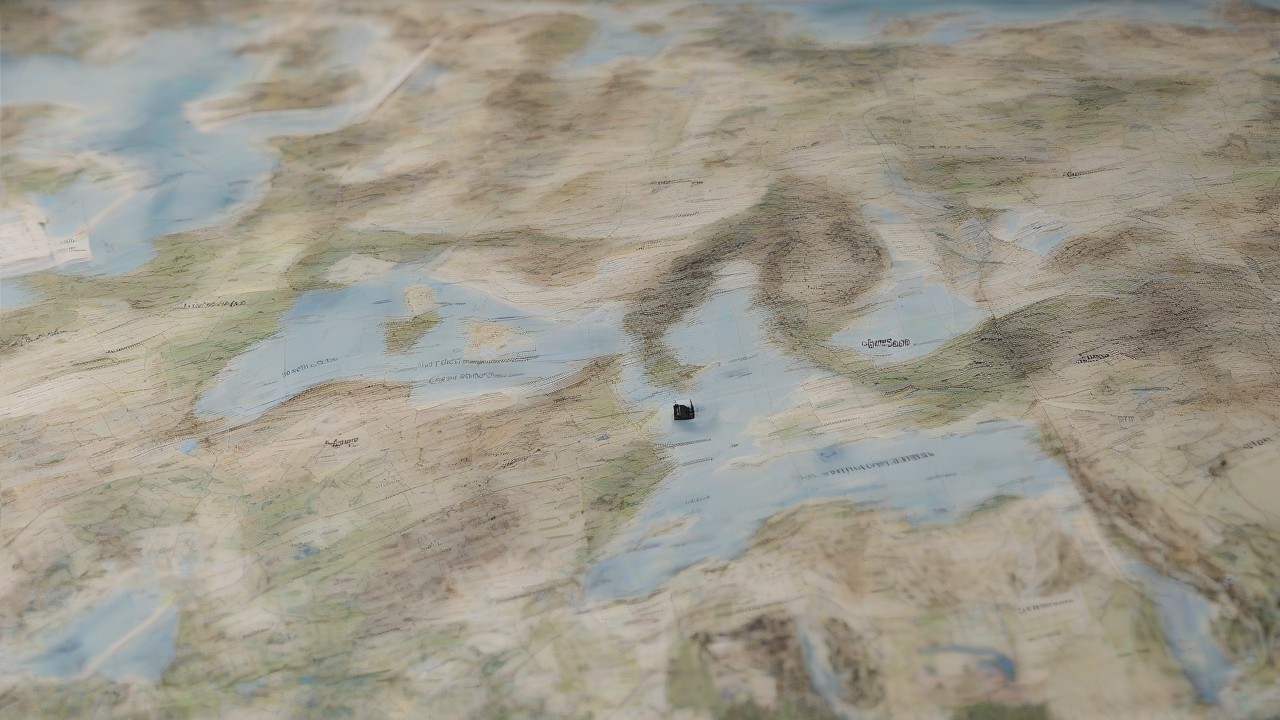
You know what they say: “don’t trust everything you see on a map.” And for good reason - it turns out, maps are basically liars when it comes to sizes. Yep, you read that right. According to a discussion started by Ken Mack on Threads, as reported by Bored Panda, maps distort reality because our lovely Earth is a three-dimensional sphere, and trying to draw it on a flat surface is like trying to put a square peg in a round hole. Or, as one clever explanation put it, like trying to make a rectangle out of an orange peel - it’s just not going to happen without some serious stretching, squashing, and tearing.
The Compromise Conundrum
So, why do maps lie to us? Well, it’s not because cartographers are secretly trying to confuse us (although, that would be a fun conspiracy theory). It’s simply because there’s no perfect way to represent a 3D sphere on a 2D surface. You have to make compromises, and those compromises can lead to some pretty wild distortions. For example, have you ever noticed how Greenland looks roughly the same size as Africa on some maps? Yeah, that’s not even close to accurate. In reality, Africa is about 14 times larger than Greenland. You can’t make this up - or can you, mapmakers?
Hilarious Explanations
When Ken Mack asked people to explain this concept in a way that a 10-year-old could understand, the internet delivered. And by delivered, I mean it brought the funny. From clever analogies to hilarious memes, people came up with all sorts of creative ways to explain why maps are basically flawed. And the best part? It’s not just about the explanations themselves, but the fact that people are actually talking about maps and how they work. Who knew cartography could be so entertaining?
The Bottom Line
So, the next time you’re navigating your way through a new city or trying to figure out how big a country really is, just remember: maps are like that one friend who exaggerates everything. They’re not trying to be dishonest, they’re just trying to make things fit into a neat little package. And hey, at least they’re consistent - consistently inaccurate, that is. As the saying goes, “don’t believe everything you see on a map” - unless you want to end up lost in a world of distorted reality.


Reader Comments