
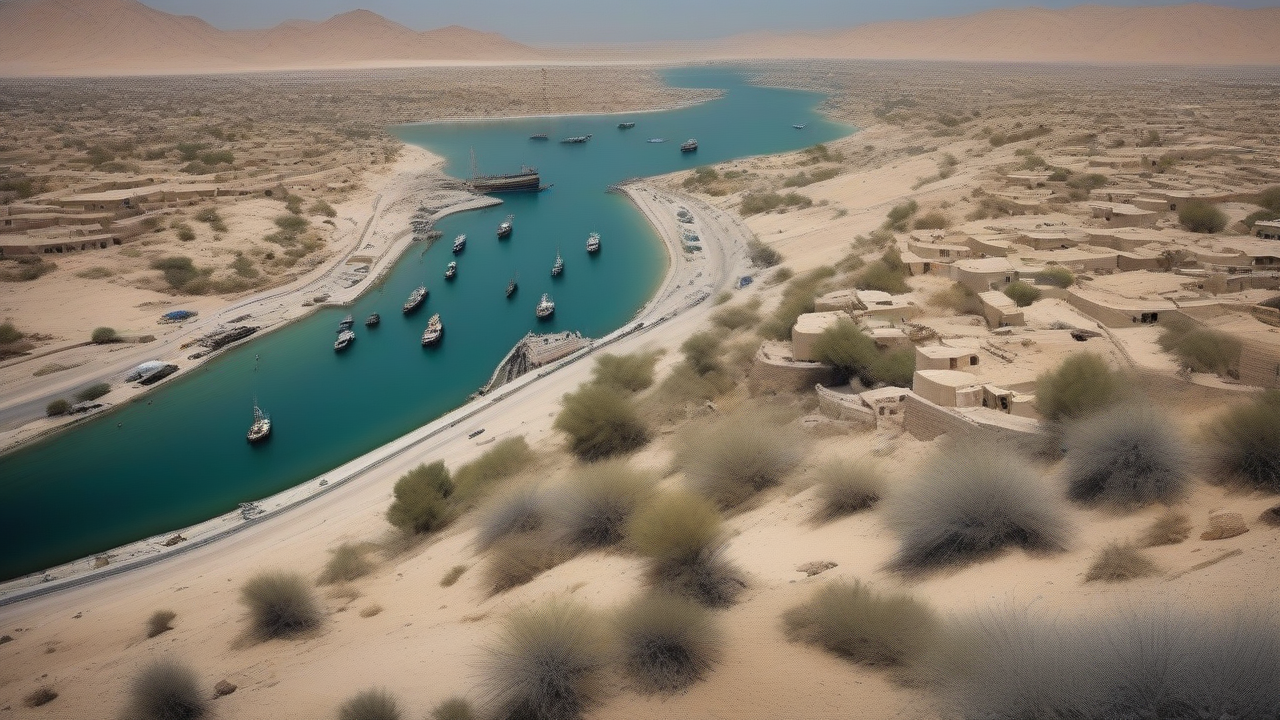
European Union Proposal for Strait of Hormuz
In a significant development, European Commission Vice-President Siim Kallas has proposed a model similar to the one used in the Black Sea to help unblock the Strait of Hormuz, according to Reuters. This move comes as tensions in the region continue to escalate, with the United States calling for a maritime coalition to protect shipping lanes. The EU’s approach, as outlined by Kallas, signals a potential shift in the bloc’s strategy for addressing the crisis in the Strait of Hormuz.
Background and Context
The Strait of Hormuz, a vital waterway connecting the Persian Gulf to the Gulf of Oman, has been a focal point of tension between the US and Iran. The US has been seeking to assemble a coalition to safeguard shipping in the region, following a series of incidents involving Iranian forces and international vessels. However, European allies have been hesitant to join the effort, with some expressing concerns about being drawn into a conflict. As reported by The Times of Israel, Kallas stated that the EU has “no appetite” to expand its Middle East naval mission to the Strait of Hormuz.
Expert Analysis
Analysts note that the EU’s reluctance to engage in the US-led maritime coalition is driven by a desire to maintain a degree of independence in its foreign policy. Observers point out that the EU is seeking to avoid being seen as a junior partner to the US, particularly in a region where European interests are significant. The move to explore alternative models, such as the one used in the Black Sea, suggests that the EU is looking for ways to address the crisis while minimizing its involvement in a potentially volatile conflict.
Impact and Implications
The stakes are high, with the free flow of oil and goods through the Strait of Hormuz critical to the global economy. A disruption to shipping in the region could have far-reaching consequences, including increased oil prices and potential shortages. As Fortune reports, the EU’s allies are demanding clarity from the US on its strategy for the region, emphasizing that the “Iran war is not NATO’s war.” The EU’s proposal for a Black Sea-style model may offer a way to de-escalate tensions and find a more sustainable solution to the crisis.
Next Steps
As the situation in the Strait of Hormuz continues to unfold, observers will be watching closely to see how the EU’s proposal is received by other nations. According to Euronews.com, Kallas is eyeing a potential shift in the EU’s naval mission to protect the Strait of Hormuz, which could involve a more coordinated effort with other European nations. With the US calling for a maritime coalition, the EU’s decision on how to proceed will be critical in determining the trajectory of the crisis. As reported by Politico.eu, European leaders have rejected US demands to help clean up the “Hormuz mess,” citing concerns about being “blackmailed” into taking a more active role. The coming days and weeks will be crucial in determining the outcome of this high-stakes diplomatic effort.

Reader Comments