
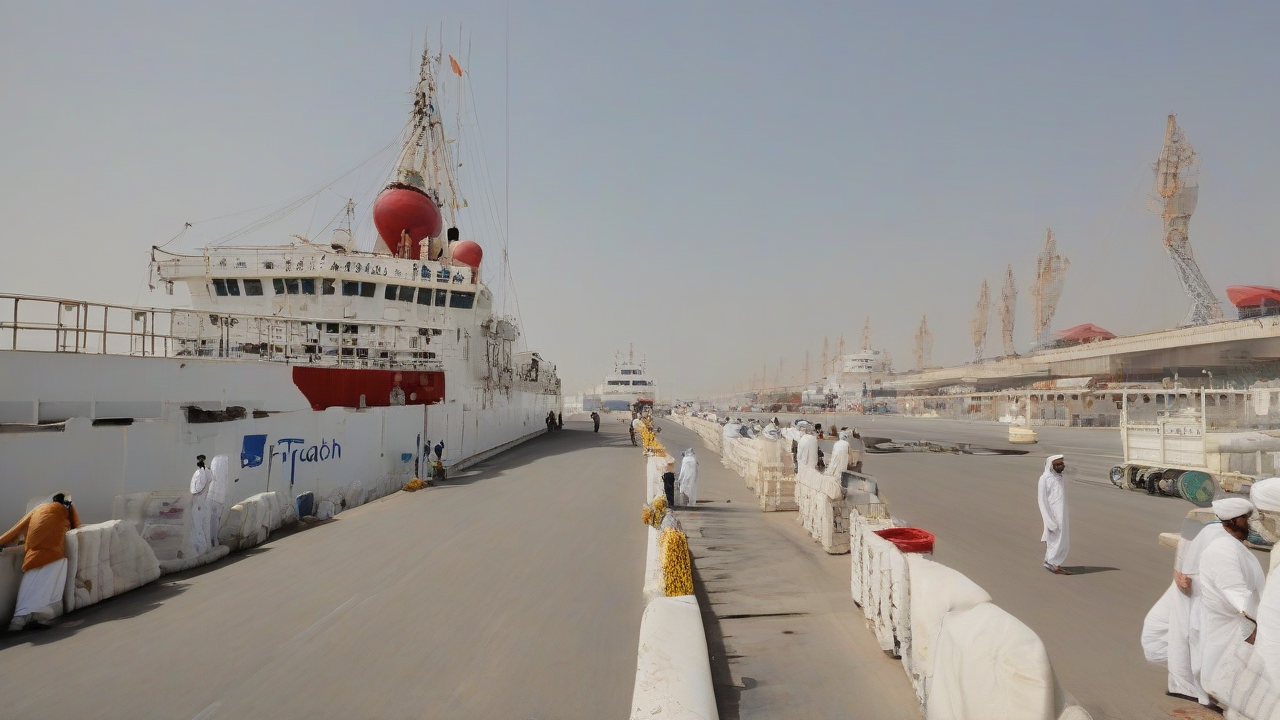
Renewed Activity at UAE’s Fujairah Terminal
In a significant development, an Indian vessel has set sail from the UAE’s Fujairah terminal, marking a return to normalcy after a recent attack on the facility, as reported by Reuters. This move comes on the heels of resumed oil loading operations at the terminal, according to media reports cited by CNBC. The resumption of activities at one of the UAE’s key ports is a crucial step towards stabilizing the region’s oil supply, which has been impacted by recent geopolitical tensions.
Context and Implications
The attack on the Fujairah terminal, which was reportedly carried out by drones and resulted in a fire, had led to the suspension of oil loadings at the port, as noted by Bloomberg. This incident is part of a broader pattern of escalating tensions in the Middle East, with the US having struck Iran’s Kharg Island, as reported by NDTV. The situation has been further complicated by calls from the US for countries like China, the UK, and Japan to deploy warships to the Strait of Hormuz, a critical waterway for global oil trade, as covered by the Financial Times.
Expert Analysis
Analysts note that the restart of oil loading operations at Fujairah is a positive sign, but the overall situation in the region remains volatile. Observers point out that the involvement of multiple global players, including the US, Iran, and other nations, adds complexity to the conflict, making it challenging to predict future developments. The move to resume operations at Fujairah signals an effort to mitigate the impact of the conflict on global oil markets, but the long-term effects of these tensions are still uncertain.
Impact on Global Oil Markets
The conflict in the Middle East has significant implications for global oil markets. The suspension of oil loadings at Fujairah, even if temporary, can lead to supply chain disruptions and potentially drive up oil prices. As reported by various media outlets, including Bloomberg and CNBC, the situation is being closely watched by market analysts and oil traders. The impact of these events is not limited to the region; it has the potential to affect oil prices and energy security worldwide.
Forward-Looking Developments
As the situation in the Middle East continues to unfold, several key developments are worth watching. The response of global powers to the US call for deploying warships to the Strait of Hormuz will be critical in determining the next phase of the conflict. Additionally, the ability of the UAE and other regional players to maintain stability in their oil operations despite the tensions will be closely monitored. According to sources indicated by Reuters and other news agencies, the coming days will be crucial in assessing the long-term impact of these events on regional and global stability.
Conclusion
The sailing of an Indian vessel from Fujairah after the terminal attack is a step towards normalcy, but the broader geopolitical landscape remains fraught with uncertainty. As the world watches the developments in the Middle East, the focus will be on how the conflict evolves and its implications for global oil markets and security. With multiple nations involved and various interests at play, the situation demands careful observation and analysis to understand its full implications.
Reader Comments