
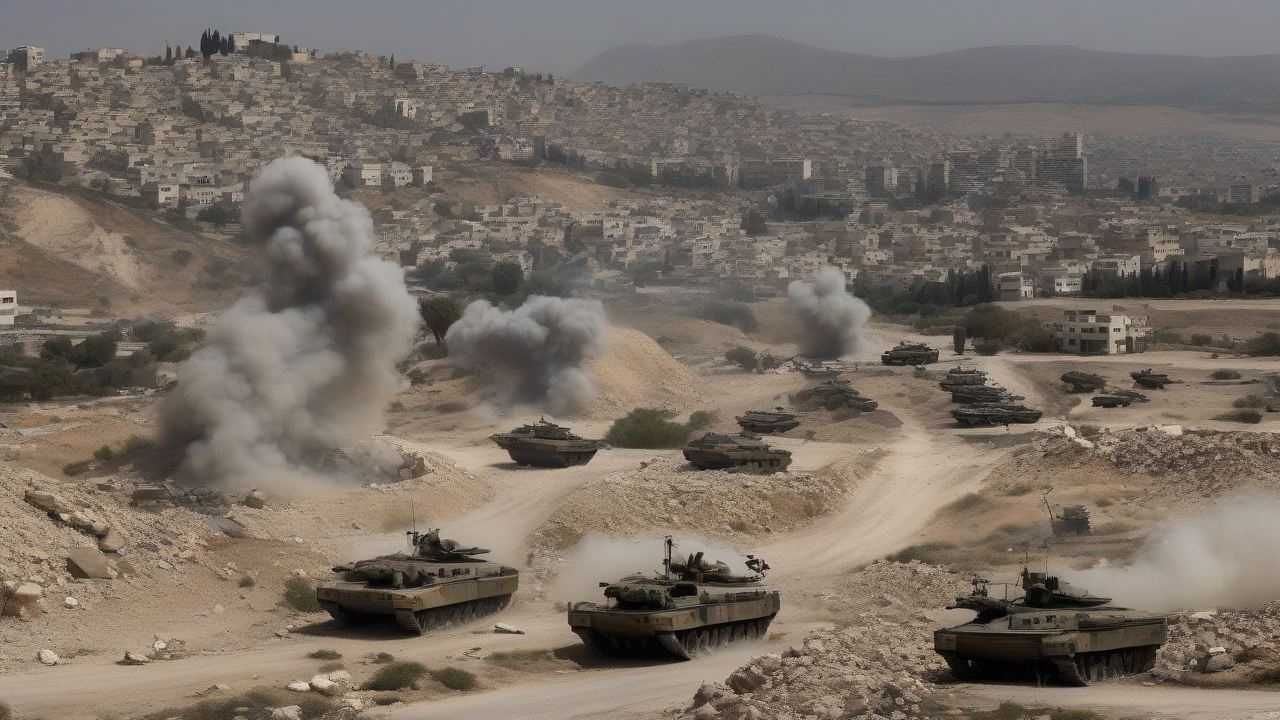
Escalating Conflict in Lebanon
The conflict between Israel and Lebanon has taken a devastating turn, with dozens of medical workers reportedly killed in recent strikes, according to The New York Times. This escalation of violence has raised concerns among observers, who note that the targeting of medical personnel and facilities is a serious violation of international humanitarian law. Analysts point out that the situation in Lebanon is becoming increasingly dire, with the conflict showing no signs of abating.
Background and Implications
The current conflict is part of a longstanding dispute between Israel and Hezbollah, a militant group based in Lebanon that is backed by Iran. The war between Israel and Hezbollah has been ongoing for decades, with periods of relative calm punctuated by outbreaks of violence. However, the recent escalation of hostilities has led to a significant increase in casualties, including the deaths of medical workers. Experts note that the destruction of medical facilities and the targeting of medical personnel can have a devastating impact on civilians, who are already struggling to access basic healthcare services.
Impact on Civilians
The conflict in Lebanon is having a disproportionate impact on civilians, who are caught in the crossfire between Israeli forces and Hezbollah militants. The BBC has reported on the aftermath of an Israeli strike that killed a family in Lebanon, highlighting the human cost of the conflict. Al Jazeera has also noted that Israel’s Gaza doctrine, which involves the destruction of infrastructure and the displacement of civilians, is being applied in Lebanon. This approach has been widely criticized by human rights groups, who argue that it is a form of collective punishment that is prohibited under international law.
International Response
The international community has been slow to respond to the escalating conflict in Lebanon, despite the growing humanitarian crisis. However, officials say that Israel is planning a massive ground invasion of Lebanon, which could lead to a significant increase in casualties and displacement. According to Axios, this move is part of a broader strategy to defeat Hezbollah and its backers in Iran. Analysts note that the situation is highly volatile and that the consequences of a large-scale invasion could be catastrophic.
What to Watch Next
As the conflict in Lebanon continues to escalate, observers will be watching closely to see how the international community responds. The United Nations and other diplomatic bodies may attempt to broker a ceasefire or negotiate a peaceful resolution to the conflict. However, with both sides dug in and refusing to back down, a peaceful resolution may be difficult to achieve. In the meantime, civilians in Lebanon will continue to bear the brunt of the conflict, with medical workers and other humanitarian personnel working tirelessly to provide aid and support to those in need. As reported by CNN, the war between Israel and Hezbollah is far from over, and the coming days and weeks will be crucial in determining the outcome of the conflict.

Reader Comments