
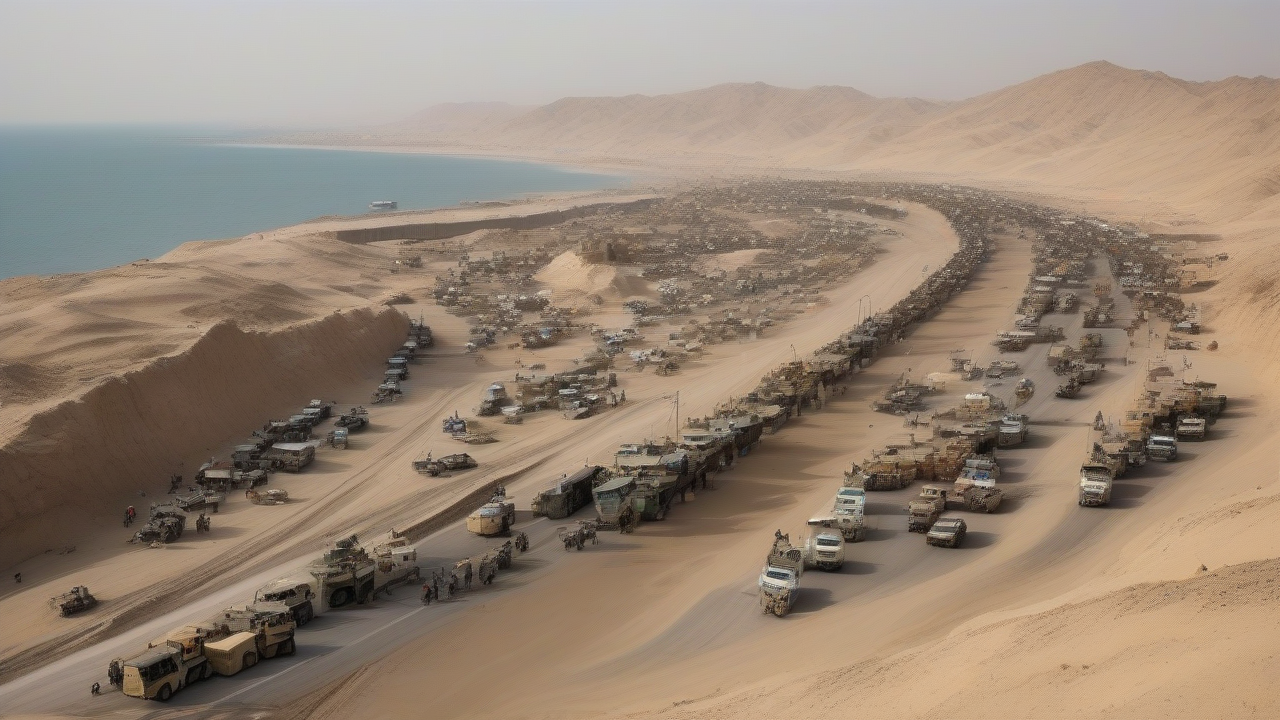
Rising Tensions in the Middle East
The international community is facing a critical challenge as the Strait of Hormuz, a vital waterway for global oil trade, remains under threat from Iran’s blockade. According to reports from The Washington Post, the US Embassy in Baghdad was recently hit, escalating concerns about regional stability. In response to these developments, President Trump has called on the world to collaborate in opening the Strait of Hormuz, emphasizing the need for collective action to ensure the free flow of oil and maintain global economic stability.
The Strategic Importance of the Strait of Hormuz
Analysts note that the Strait of Hormuz is a crucial chokepoint for international oil trade, with approximately 20% of the world’s oil supply passing through it. As reported by the Wall Street Journal, securing the Strait would require a significant commitment of resources and cooperation from multiple countries. The move signals a growing recognition of the need for a unified response to the escalating tensions in the region. Observers point out that the situation is complex, involving not only the US and Iran but also other regional players, making a diplomatic solution challenging to achieve.
Impact on Global Oil Markets
The blockade of the Strait of Hormuz has significant implications for global oil markets. Experts indicate that any disruption to oil supplies could lead to price increases, affecting economies worldwide. The situation is being closely watched by oil traders and analysts, who are concerned about the potential for further escalation. As noted by Al Jazeera, the involvement of multiple countries in securing the Strait could help to mitigate the risks, but it also raises questions about the potential for miscalculations or unintended consequences.
The Role of International Cooperation
The US Embassy attack in Baghdad highlights the need for international cooperation in addressing the growing tensions in the region. According to The Boston Globe, President Trump’s call for global action to open the Strait of Hormuz reflects a recognition that the issue cannot be resolved by the US alone. The Atlantic notes that the situation requires a nuanced and multifaceted approach, involving diplomatic, economic, and military components. Sources indicate that several countries are considering contributing to a coalition to secure the Strait, but the details of such an effort remain unclear.
What to Watch Next
As the situation continues to unfold, several key developments will be worth watching. The response of the international community to President Trump’s call for action will be crucial, as will the actions of Iran and other regional players. The impact of the blockade on global oil markets will also be closely monitored, with any significant disruptions likely to have far-reaching consequences. According to The Washington Post, the US and its allies are preparing for a range of scenarios, from diplomatic negotiations to military action, underscoring the complexity and uncertainty of the situation. As reported by various sources, including the Wall Street Journal and Al Jazeera, the coming days and weeks will be critical in determining the course of events in the region.
Reader Comments