
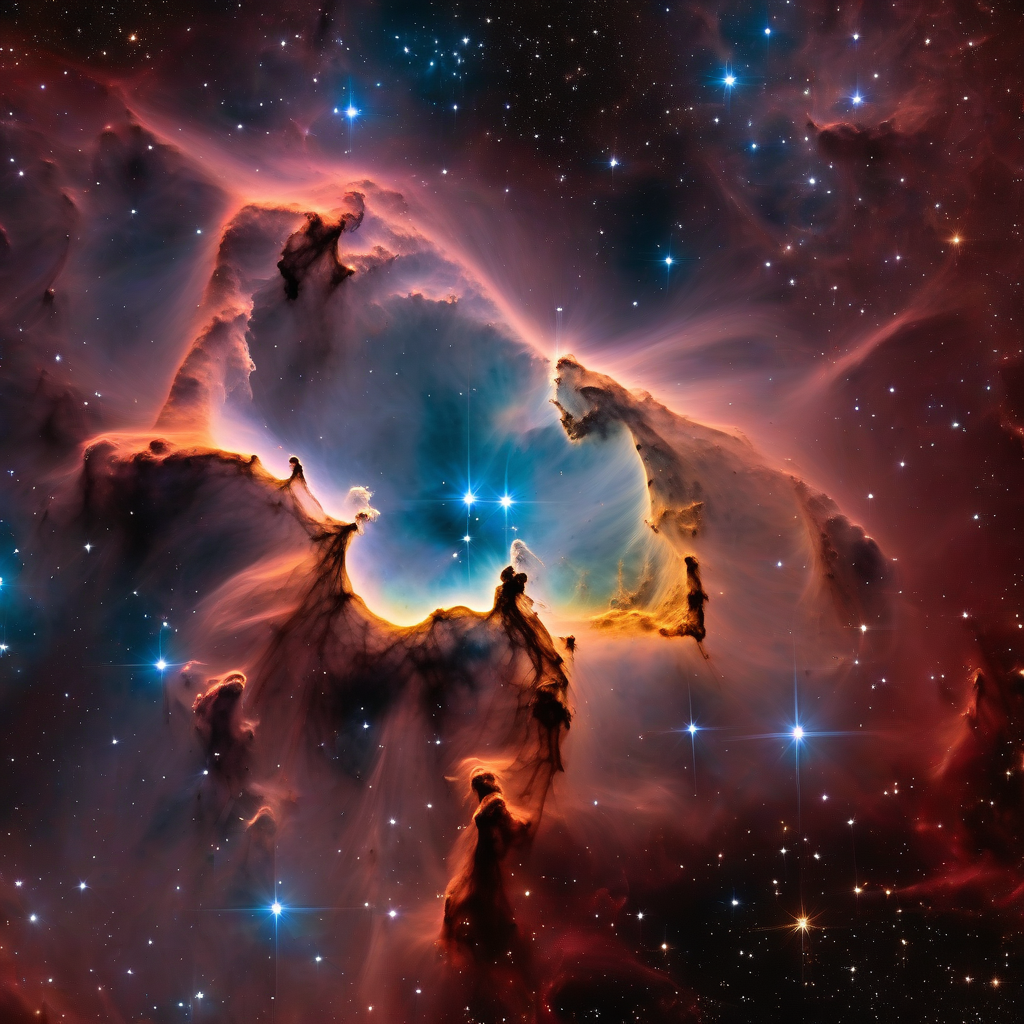
A Chemical Treasure Trove in Deep Space
Astronomers have uncovered a surprising wealth of organic molecules using the James Webb Space Telescope, detecting an extraordinary mix of carbon-rich compounds in an ultra-luminous infrared galaxy far beyond our own Milky Way. The discovery includes benzene, methane, and the highly reactive methyl radical — a molecule never before observed outside our galaxy.
The findings expand our understanding of the chemical complexity that exists in extreme cosmic environments and could reshape theories about how organic chemistry emerges across the universe.
What Was Found
The research team detected a diverse array of carbon-bearing molecules using JWST’s powerful infrared spectrometers, which can identify chemical signatures invisible to other telescopes. Among the most significant findings was the methyl radical — a short-lived, highly reactive molecule that plays a crucial role in chemical reactions leading to more complex organic compounds.
The presence of benzene, a ring-shaped molecule that serves as a building block for many complex organic chemicals, was also notable. On Earth, benzene is a fundamental component of many biological and industrial processes.
Why It Matters
The detection of these molecules in an ultra-luminous infrared galaxy — a type of galaxy undergoing intense star formation and powered by enormous energy output — suggests that complex organic chemistry can thrive in some of the most energetic environments in the universe.
This challenges earlier assumptions that such delicate molecules would be destroyed by the intense radiation and turbulence found in these galaxies. Instead, the findings suggest that star-forming regions may actively produce the building blocks of organic chemistry.
Implications for Astrobiology
While the discovery does not directly indicate the presence of life, it adds to a growing body of evidence that the chemical ingredients for life are widespread throughout the cosmos. If complex organic molecules can form in environments as extreme as ultra-luminous infrared galaxies, the potential habitats for their emergence may be far more diverse than previously assumed, as reported by ScienceDaily.
Looking Ahead
The research team plans to use JWST to survey additional galaxies for similar chemical signatures, building a catalog of extragalactic organic chemistry. These observations could provide crucial data for understanding how organic molecules are distributed across the universe and how they might contribute to the emergence of prebiotic chemistry in newly forming planetary systems.


Reader Comments